The use of dry electrodes marks a significant shift in physiological recording, offering a range of benefits that prioritize both efficiency and participant comfort. The primary advantage of dry electrodes is the elimination of conductive gels, which simplifies the setup process, avoids the mess associated with traditional “wet” systems, and removes the need for post-recording cleanup for both the participant and the equipment. This makes them an excellent choice for student labs or long-term monitoring where ease of use and consistent results are essential. Furthermore, because they do not require consumables like gel or adhesive pads, they offer substantial long-term cost savings.

However, achieving high-quality data with dry electrodes requires specific attention to detail. A key “pro tip” for success is to ensure adequate and consistent pressure; because there is no gel to bridge the gap between the skin and the sensor, a secure mechanical contact is vital to keep impedance low and minimize motion artifacts. It is also recommended to choose recording sites that are free of excessive hair and to avoid areas with scar tissue or irritation, as these can interfere with signal fidelity. While dry electrodes are more prone to artifacts than gel-based systems, their convenience makes them ideal for “physiology anywhere” applications, provided that the user carefully manages the interface through proper placement and securing techniques.
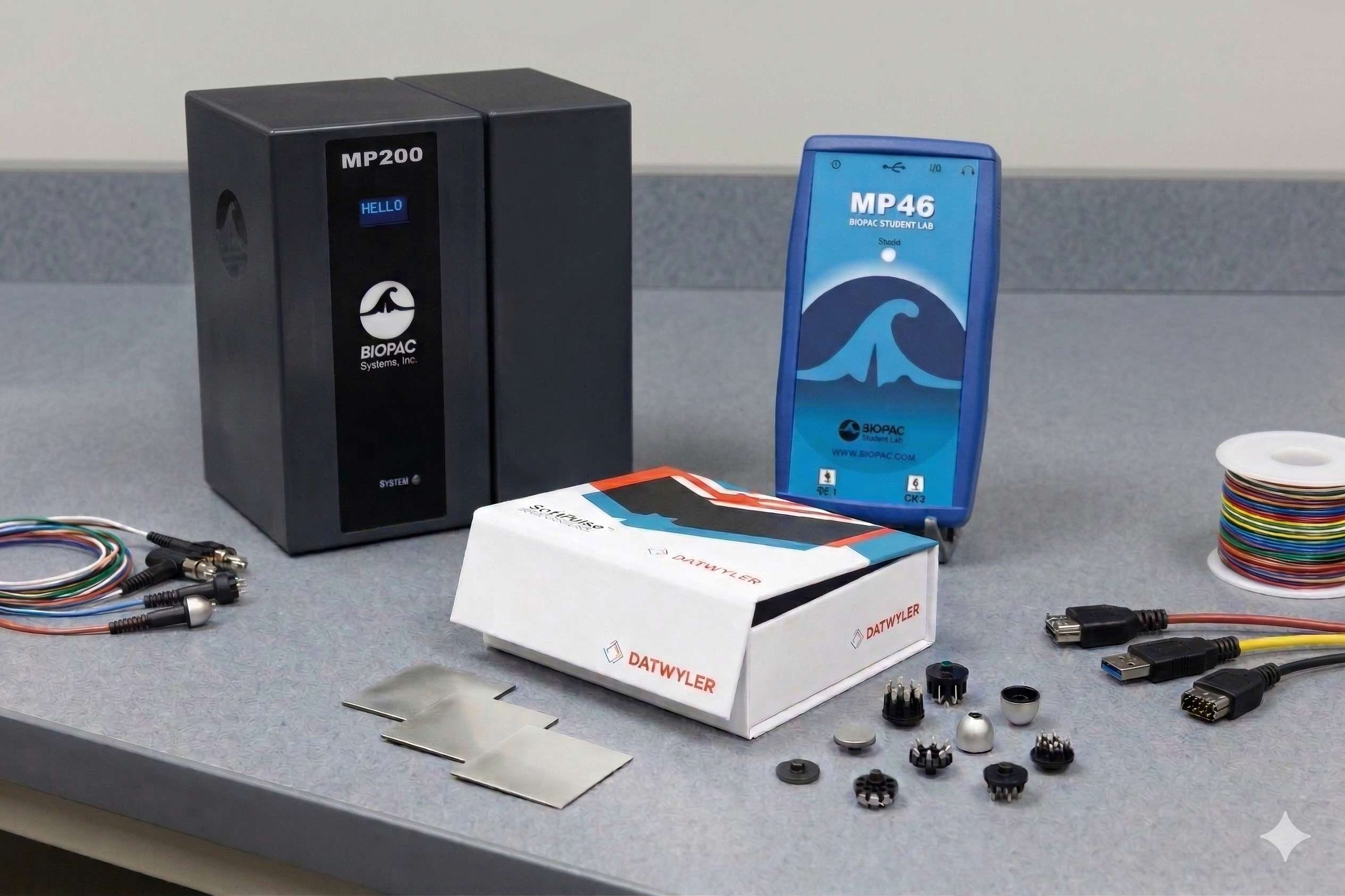
To learn more on electrodes selection and procedure for physiological recording and how to best use SoftPulse dry electrodes, watch the video of our partner BIOPAC System, Inc. or contact us for support!